


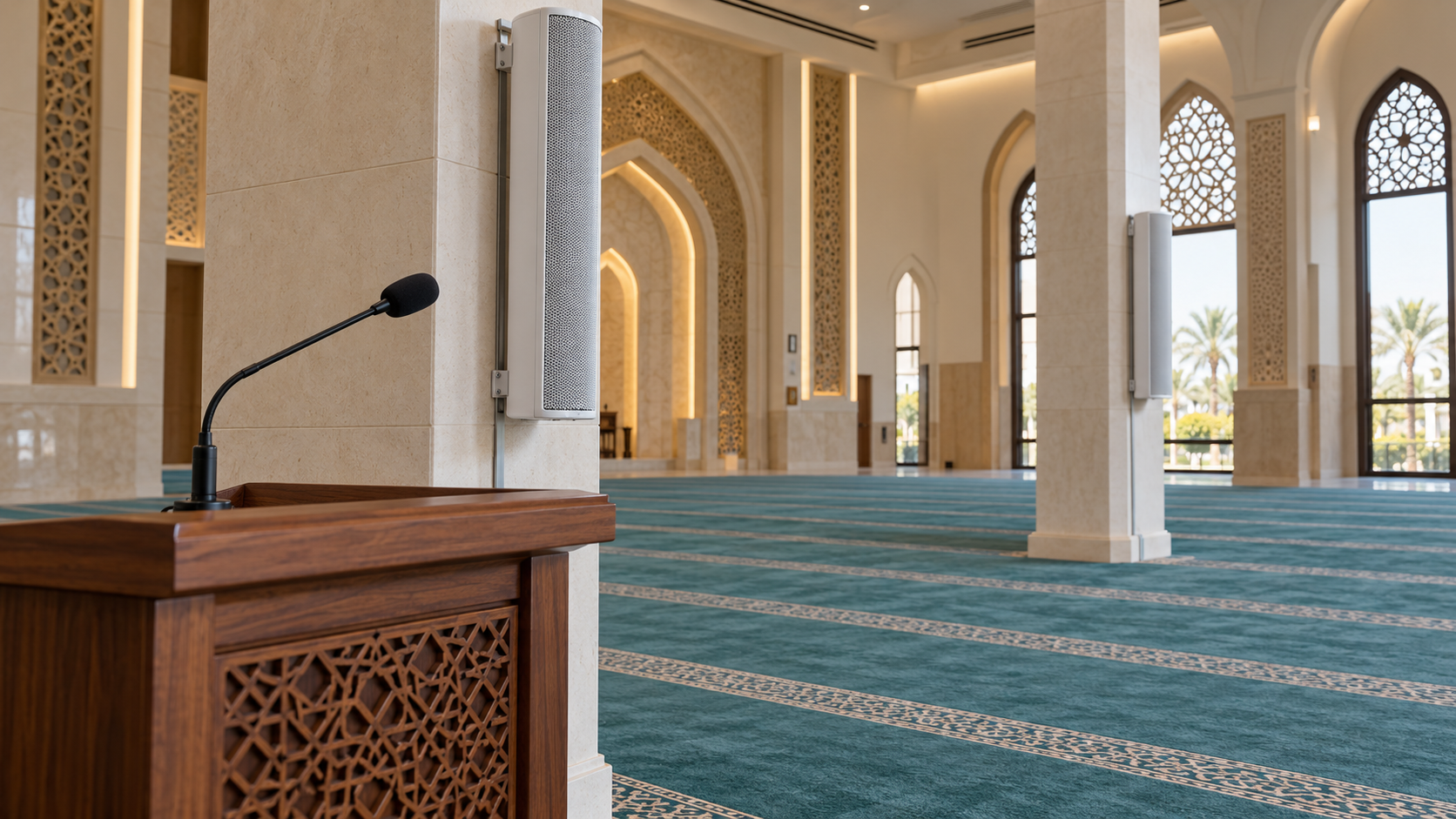

Audio Systems for Mosques: Clear Sound for Every Prayer Hall. How Clear sound helps worshippers follow prayers, Quran recitation, and the khutbah without straining to hear. When words become blurred by reverberation or disappear towards the back of a prayer hall, increasing the volume may make listening harder rather than solve the problem.
A well-planned mosque sound system brings microphones, loudspeakers, amplification, and room acoustics together. For mosque committees and facility managers in the UAE, the goal is consistent, intelligible sound that remains comfortable throughout the congregation’s listening areas.
Why Mosque Audio Needs Careful Planning
Prayer halls can present demanding acoustic conditions. Hard walls, high ceilings, and large reflective surfaces may allow sound to persist after the original words have been spoken. This reverberation can overlap with subsequent speech and reduce clarity.
Pillars, balconies, and separate prayer spaces can also affect coverage. A system that sounds acceptable near the imam may leave other areas too quiet or produce overlapping sound from several speakers.
Effective Audio Solutions For Mosques should therefore begin with the building and its daily use, rather than a standard equipment package selected only by price.
What Does a Mosque Sound System Include?
Microphones for Clear Voice Pickup
Microphones should capture the voice clearly while limiting unnecessary room sound. A fixed microphone may suit a regular speaking position, while a suitable wearable microphone can accommodate movement where required.
Placement matters as much as the equipment. Keeping an appropriate, consistent distance from the microphone helps maintain stable levels. Choose the microphone format around the imam’s preferences, speaking position, and practical requirements during prayer and sermons.
Loudspeakers Matched to the Space
The right loudspeaker arrangement directs useful sound towards listeners. Speaker selection should consider coverage angle, mounting position, listening distance, and the room’s acoustic behaviour.
Column loudspeakers, wall-mounted units, or other designs may suit different spaces, but no single type is automatically right for every mosque. Ask the installer to explain how the proposed layout covers the front, middle, rear, and any separate prayer areas.
Amplifiers, Mixers, and Processing
Amplifiers must be compatible with the loudspeaker system and its electrical load. A mixer manages microphone inputs and operating levels, while suitable signal processing can provide equalisation, level control, and timing adjustments.
These tools support a properly designed installation. They cannot completely compensate for unsuitable speaker placement or excessive room reverberation. Simple, clearly labelled controls also help daily users operate the system consistently.
Wired or Wireless Microphones: Which Is Better?
A wired microphone can be practical for a fixed position because it avoids transmitter battery management and wireless signal coordination. Cables still need secure routing, suitable connections, and routine inspection.
Wireless systems provide flexibility when movement is needed. However, receiver placement, coverage, battery routines, and interference must be considered. Request an onsite test in the actual operating positions rather than relying entirely on an advertised range.
You may encounter recommendations for the Best Wireless Microphone For Singing when researching vocal equipment. For mosque use, assess those products specifically for spoken delivery and recitation: natural voice reproduction, reliable pickup, comfortable use, and compatibility with the installed system matter most.
How Can You Reduce Echo and Feedback?
Reverberation and feedback are different problems. Reverberation is the persistence of reflected sound within a room. Feedback occurs when amplified speaker sound re-enters a microphone and is repeatedly amplified, producing ringing or howling.
Start by reviewing microphone and speaker positions, operating levels, and the number of microphones left active. Keep unused microphones muted and avoid directing speaker output towards microphone pickup areas.
Where several speaker groups cover a large hall, appropriately configured delays can help align their arrival times in overlapping listening areas. An acoustic assessment may also identify suitable treatment options for problematic reflections.
Professional mosque sound tuning should evaluate intelligibility across the room, rather than simply make the system louder at the control position.
Plan Separate Prayer Areas and Daily Operation
Women’s prayer areas, additional floors, and overflow spaces may need independent audio zones. Separate level control helps accommodate different room sizes and occupancy without changing the entire system.
Agree on straightforward operating presets for everyday prayer, sermons, and lectures where appropriate. Staff should know how to select microphones, check batteries, mute unused inputs, and restore the normal settings after an event.
Include a practical backup arrangement, such as an available wired microphone, and ask what happens if a component fails. Regular checks of cables, connectors, batteries, and speaker output help identify problems before busy prayer times.
During handover, listen from several prayer positions while someone speaks at a normal level. Note unclear areas and ask the installer to address them before accepting the system.
What Affects the Cost of Mosque Audio?
The budget depends on room size, acoustic challenges, speaker coverage, microphone numbers, cabling, installation access, processing, and support requirements.
When comparing Wireless Microphone Price in Abu Dhabi, confirm whether the quotation includes the transmitter, receiver, required accessories, installation, and warranty. A microphone’s purchase price is only one part of the total system cost.
Request an itemised proposal with commissioning, user training, and after-sales support clearly described. Existing equipment may be reusable after assessment, so a complete replacement is not always necessary.
Frequently Asked Questions
Will more powerful speakers improve clarity?
Not necessarily. Coverage, room reflections, microphone technique, and system tuning can matter more than additional output. Increasing volume without identifying the cause may worsen intelligibility.
How many speakers does a mosque need?
There is no universal number. The layout depends on dimensions, ceiling height, speaker coverage, obstructions, and separate listening areas. A site assessment should determine the design.
Can an existing mosque system be upgraded?
Yes, depending on its condition and compatibility. Repositioning speakers, replacing a faulty microphone, adjusting processing, or improving zoning may help. Assess the existing installation before choosing upgrades.
Discuss Your Mosque Audio Requirements with BrightApollo
BrightApollo offers customised mosque audio solutions for different prayer hall sizes. Contact BrightApollo to discuss your layout, existing equipment, and listening challenges, and request a proposal focused on clear sound and straightforward daily operation.
